
 Customer Retention
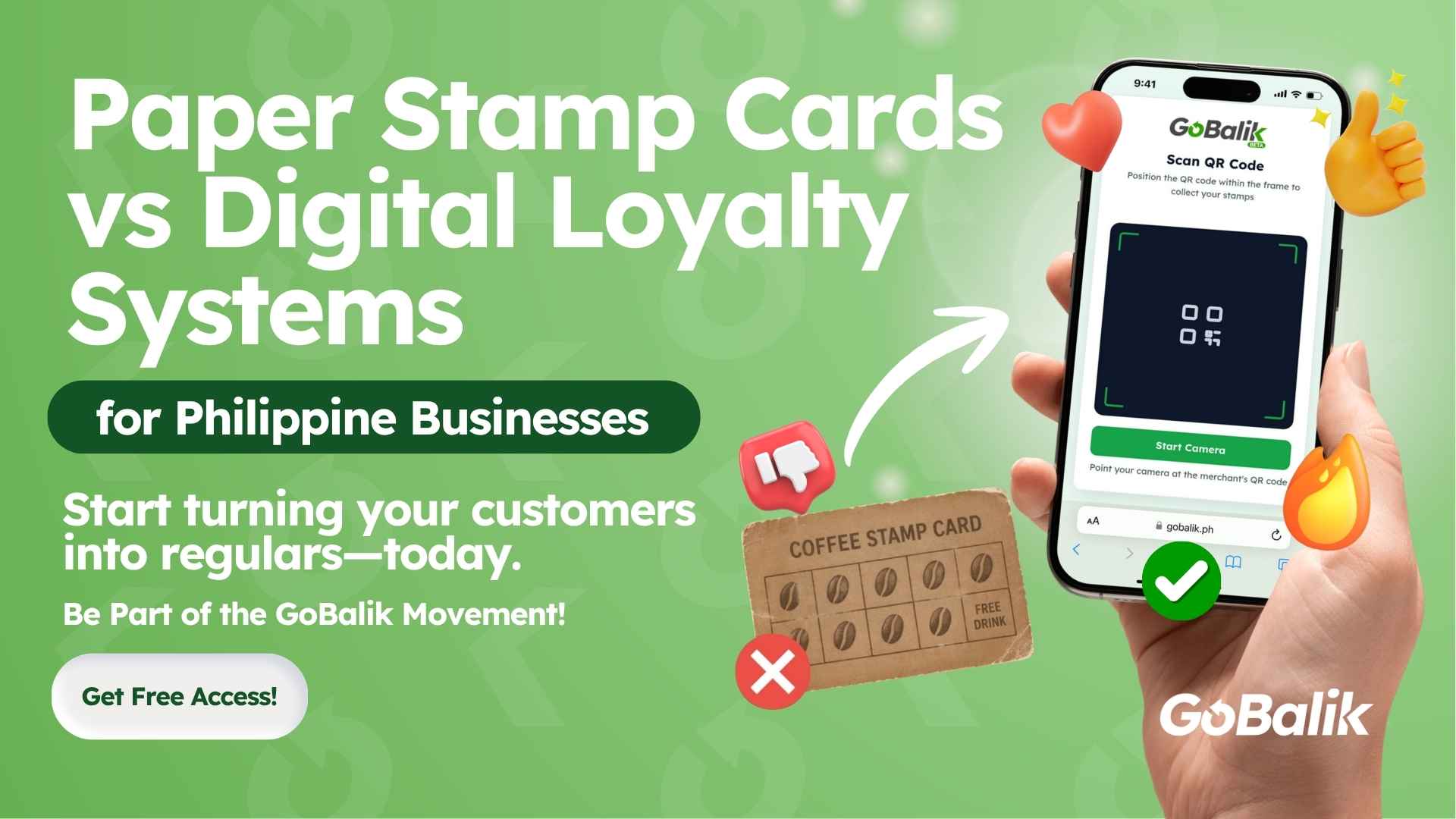
Paper Stamp Cards vs Digital Loyalty Systems for Philippine Businesses
For many cafés, milk tea shops, laundry, salons, car wash, and small businesses in the Philippines, paper stamp cards have been a familiar part of customer loyalty for years.
They’re simple, affordable, and easy to introduce.
But as more Philippine SMEs begin focusing on customer retention and repeat visits, many business owners are starting to notice the hidden operational problems behind traditional loyalty cards.
What seems simple at first can eventually become difficult to manage as customer traffic grows.
Today, more businesses are beginning to compare traditional paper stamp cards with digital loyalty systems to improve customer retention and simplify daily operations.
Why Many Businesses Still Use Paper Stamp Cards
Paper loyalty cards became popular because they’re easy to understand for both customers and staff.
Businesses simply:
Print cards
Add stamps after purchases
Reward customers after completing visits
For small businesses starting out, this setup often feels enough.
Customers also immediately recognize how it works because loyalty stamp cards are already common across cafés, food businesses, and retail stores in the Philippines.
But over time, many SMEs begin experiencing operational friction that slowly affects customer engagement.
The Hidden Problems with Traditional Stamp Cards
One of the biggest issues with paper stamp cards is that customers frequently lose them.
A customer may enjoy your café or business — but if the loyalty card gets misplaced, forgotten at home, or damaged, the reward progress disappears with it.
Many businesses also experience:
Forgotten manual stamping
Slower cashier operations during busy hours
Additional printing expenses
Difficulty tracking repeat customers
No visibility into customer visit behavior
Inconsistent reward claiming
These problems may seem small individually, but over time they affect the overall customer retention experience.
In many cases, businesses focus heavily on acquiring new customers while quietly losing existing ones in the background.
This is one of the reasons many Philippine SMEs struggle with repeat customer consistency.
Why Digital Loyalty Systems Are Growing in the Philippines
Digital loyalty systems are becoming increasingly popular among Philippine SMEs because they simplify customer retention without heavily complicating operations.
Instead of physical cards, customers collect rewards digitally through:
QR codes
Mobile numbers
Digital stamp tracking
Visit monitoring systems
This removes many of the common issues caused by paper-based systems.
Customers no longer need to carry physical loyalty cards, while businesses gain better visibility into repeat customer activity.
Platforms like GoBalik are helping local businesses modernize loyalty systems using QR-based rewards designed specifically for Philippine SMEs.
Paper Cards vs Digital Loyalty Systems
Traditional paper cards still work for some businesses — especially very small operations with lower customer traffic.
However, as customer volume increases, digital systems often become easier to manage operationally.
Traditional Paper Stamp Cards
Customers can lose cards
Manual stamping required
No customer tracking
Printing costs continue over time
Harder to measure retention performance
Slower during busy hours
Digital Loyalty Systems
Rewards tied to customer records
Faster QR-based claiming
Repeat visits become trackable
Less paper waste
Easier reward management
Better long-term scalability
For many SMEs, the biggest advantage is not simply “going digital.”
The real advantage is visibility.
Businesses begin understanding:
how often customers return
how rewards influence behavior
which customers are becoming regulars
whether retention systems are actually working
Customer Retention Is Becoming More Important
Many Philippine businesses today are facing stronger competition than ever before.
Customers now have:
more café options
more food choices
more nearby competitors
more convenience platforms
Because of this, customer acquisition alone is no longer enough.
A customer may enjoy a business once, but without any incentive or engagement, there is often little reason to actively return — especially when many competitors offer similar experiences.
This is why more SMEs are starting to focus on customer retention management instead of relying purely on first-time visits.
The Shift Toward Simpler Loyalty Systems
Interestingly, many customers are already comfortable using QR systems and digital rewards because of the rise of:
e-wallets
QR payments
online ordering
mobile-first experiences
For businesses, this creates an opportunity to modernize loyalty systems without requiring complicated onboarding.
The goal is not to make loyalty more complex.
The goal is to make returning easier.
Digital Loyalty Also Helps Reduce Paper Waste
Aside from improving customer retention and operational efficiency, digital loyalty systems can also help businesses reduce paper waste over time.
Traditional stamp cards require continuous printing and reprinting as businesses issue new cards to customers regularly. Lost or damaged cards also increase paper consumption further, especially for businesses with high customer traffic.
By switching to digital loyalty systems, businesses reduce dependency on physical cards while encouraging a more paperless customer experience through QR-based rewards and digital visit tracking.
While the environmental impact may seem small at first for individual businesses, wider adoption of digital loyalty systems across Philippine SMEs can gradually help reduce unnecessary paper usage in everyday operations.
For many modern businesses, going digital is no longer only about convenience — it is also becoming part of building more sustainable operational practices.
The Future of Loyalty Programs in the Philippines
Paper stamp cards will likely continue existing for many small businesses.
But as Philippine SMEs continue modernizing operations, digital loyalty systems are slowly becoming the more scalable long-term approach.
Businesses are beginning to realize that loyalty programs are not only about giving rewards.
They are also about:
encouraging repeat visits
improving customer experience
increasing retention
understanding customer behavior
building long-term business sustainability
In today’s competitive environment, customer retention is becoming one of the most important growth strategies for Philippine SMEs.
And for many businesses, digital loyalty systems are becoming one of the simplest ways to start.
Related Articles
Customer Retention vs Customer Acquisition: Which Matters More for SMEs
How Businesses Can Migrate from Traditional Stamp Cards to Digital Loyalty Systems
Why Philippine SMEs Need a Customer Retention Management System in 2026
Bring Digital Loyalty to Your Business
GoBalik helps Philippine businesses replace traditional paper stamp cards with a simpler digital loyalty experience designed for repeat customers and long-term retention.
Businesses can:
issue QR-based rewards
track repeat customer visits
manage loyalty campaigns
modernize customer engagement
without complicated setups.
Register your business for FREE through GoBalik and start turning first-time customers into regulars.
Tags